Most central Vietnam travel tips turn out to be tips for all of Vietnam. This page keeps to what changes on one strip of coast, from Phong Nha in the north to Hoi An in the south, the stretch our cars drive: what to sort out before you fly, what happens when you land, how to pay, when to come, what to pack, how to dress at the monuments and when to book a car.
Since 2025 that strip has had three administrative units. Phong Nha belongs to Quang Tri province (it was in Quang Binh until then), Hue sits in the middle, and Hoi An is part of Da Nang city (it was in Quang Nam). Maps, booking sites and hotel addresses may still show the old province names for a while.
Rules that change by government decision, such as visa exemptions, are given here with their dates, and with a link to the official source where there is one; we checked them in October 2026. What each place is like, how many days to give it and how to get between places have guides of their own, linked along the way.
Central Vietnam travel tips at a glance
Eight things to settle, in the order this page takes them:
Entry — citizens of 24 countries, the UK, France, Germany and Japan among them, can stay 45 days without a visa; most other travellers apply for an e-visa on the official portal.
Arrival — Da Nang has the region's main international airport; the airports for Hue and Phong Nha are served mainly by domestic flights.
Paying — cards work in most hotels and larger restaurants; carry cash for stalls, markets and days outside the cities.
Phone — bring your passport if you want a local SIM, or buy an eSIM before you fly.
Season — February to April is the most comfortable time; October to December is the rainy season.
Packing — flat shoes, a hat, and one outfit that covers shoulders and knees for pagodas and temples.
Health — no vaccinations are required for entry; bring insect repellent.
Booking — book your car as soon as your dates are fixed, especially around Tet, which begins on 6 February 2027.
Entry: do you need a visa?
It depends on your passport. Citizens of 24 countries can stay in Vietnam for 45 days from the day they arrive without a visa; most other travellers need an e-visa, which can be issued for up to 90 days. The 45-day exemptions come from two government resolutions, and each has an end date:
Any purpose of travel, until 14 March 2028 — the United Kingdom, France, Germany, Italy, Spain, Denmark, Sweden, Norway, Finland, Russia, Japan and South Korea, under Resolution 44/NQ-CP; the national tourism authority's notice has the details.
Tourism only, until 14 August 2028 — Belgium, Bulgaria, Croatia, the Czech Republic, Hungary, Luxembourg, the Netherlands, Poland, Romania, Slovakia, Slovenia and Switzerland, under Resolution 229/NQ-CP.
Some other countries, mostly in South-East Asia, have separate agreements with Vietnam; a Vietnamese embassy can tell you whether yours is one of them.
Everyone else, including citizens of the United States, Canada and Australia, applies for an e-visa. It can be single or multiple entry, and the official place to apply is evisa.gov.vn, the Immigration Department's portal. Type the address yourself rather than following an advert, and check it before you enter your passport details or pay. The fee is paid online and is not refunded if the application is refused.
One detail matters on this trip in particular. An e-visa is valid only through the entry and exit points you choose when you apply. Put down the airport where you will first land in Vietnam and the one you will leave Vietnam from: Da Nang if you fly straight into the region, or Hanoi or Ho Chi Minh City if you land there and take a domestic flight on to Hue or Dong Hoi.
Whichever group you are in, make sure your passport has at least six months left. It is a condition of the tourism exemption, and the UK government also asks British travellers to have two blank pages.
Arriving: the first hour
Da Nang has the region's main international airport. Phu Bai, outside Hue, and Dong Hoi, the airport for Phong Nha, are served mainly by domestic flights. Hoi An has no airport; the nearest is Da Nang. If your trip runs the length of the strip, flying into one airport and out of another saves a drive back; our itinerary guide explains which airport to fly into and out of.
Before you leave the terminal, take out some cash. At the major airports, ATMs that accept international cards stand just outside the arrival gates, and there are exchange counters too. Enough for the first day or two saves a search for an ATM later.
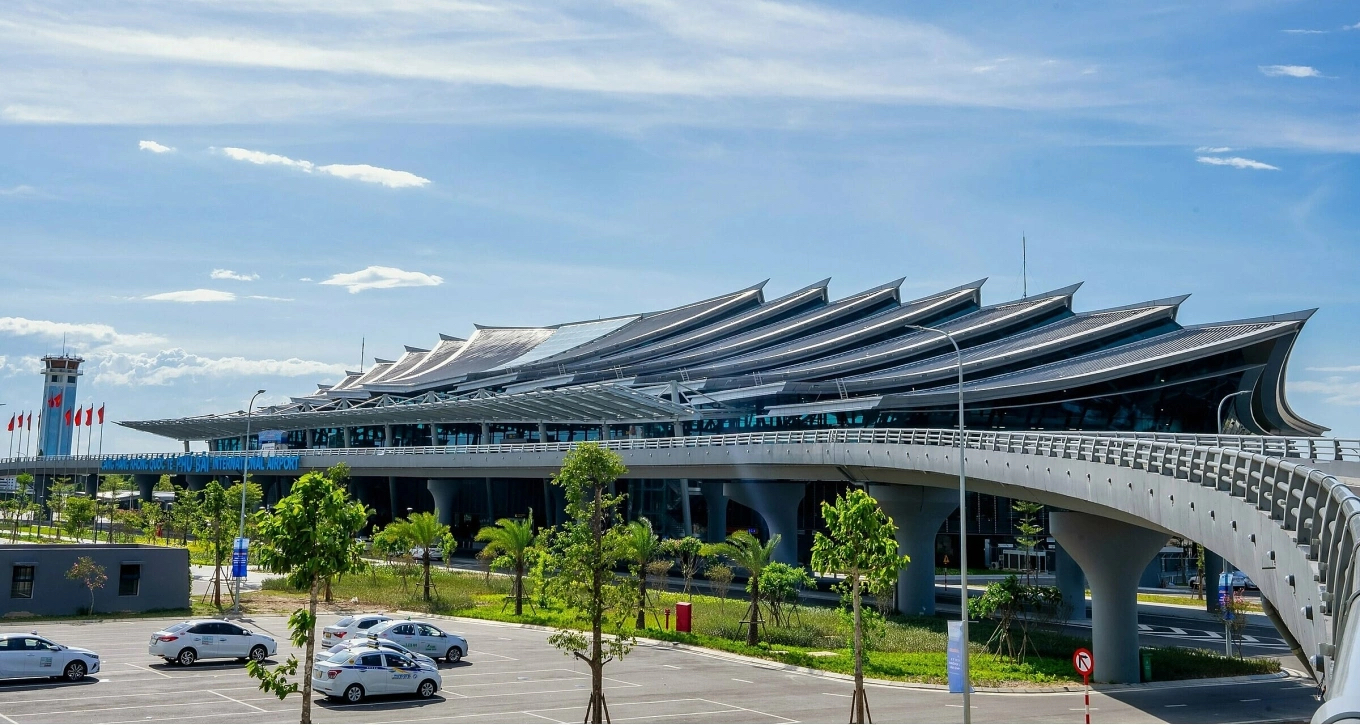
If you have booked a transfer with us, your driver meets you in the arrivals area holding a sign with your name. We track your flight, and if it lands late, the driver waits. Phu Bai airport and Hue are linked by a fixed-price car in either direction, listed on our Routes page. Da Nang airport to Hoi An is a fixed-price route too, priced on request because it is not on the list yet.
Cash, cards and paying on the central coast
Vietnam's currency is the đồng (₫, VND), and it comes only as notes. According to the national tourism authority, most establishments take major cards such as Visa, and many businesses and taxis take contactless Visa; cash is for small purchases and street vendors. Money can be changed at hotels, banks and airport counters.
On this strip, the line between card and cash falls in a predictable place. In Hue, Da Nang and Hoi An, a card covers most hotels and larger restaurants. A bowl of noodles at a stall, a morning at a market, a day in Phong Nha, at the DMZ sites or in the villages outside Hue: plan on cash. Take what you need from an ATM in Hue or Da Nang the day before, and keep small notes for stalls.
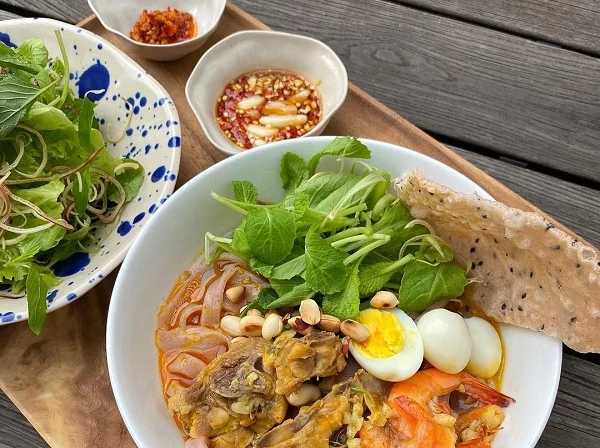
Each monument in Hue sells its own ticket at the gate; the 2026 ticket prices for Hue's monuments are in our monuments guide.
For our cars, there is nothing to pay in advance and no deposit. You pay the driver at the end of the trip, in cash, in Vietnamese đồng or US dollars.
Tipping is not a traditional part of Vietnamese culture. In restaurants and cafés it is not expected, though it is appreciated.
Staying connected
A Vietnamese SIM card is registered to the buyer's passport, so take yours to the shop. The alternative is an eSIM, bought online before you fly and ready when you land, if your phone supports one.
The difference on this strip is the long days away from the cities. Download offline maps of the region before a long drive or a day in Phong Nha, and do not count on a signal inside the caves.
We confirm bookings on WhatsApp, Zalo or Messenger, or by phone, so have at least one of these working before you arrive.
When to go: the best time to visit central Vietnam
The best time to visit central Vietnam is February to April, the most comfortable months for long days outdoors. October to December is the rainy season, and May to August is hot. Each season asks for a slightly different plan.
February to April. This is when long outdoor days are easiest: the Citadel and the tombs in Hue, the DMZ sites, the old town in Hoi An.
October to December. Rain slows the drives and now and then closes the Hai Van Pass road; the car then takes the tunnel, and you lose the view rather than the day. The lower parts of Hue occasionally flood in these months. Keep a spare day in the plan, keep the longest drive away from your last day, and before a long drive check the forecast and warnings from the national hydro-meteorological forecasting centre.
May to August. Hot. Plan the monuments for early morning and late afternoon, and keep the middle of the day for a rest or the drive. Hue is hot from April to August, which is why the packing list below starts in April.
Tet and other dates. Tet, the lunar new year, is the holiday to plan around. In 2027 its first day falls on Saturday 6 February, inside the comfortable season, so if you are aiming for February, check where your dates fall first. It is the busiest travel time of the year in Vietnam, and some places close for the holiday, so book cars and rooms as early as you can. Festivals and other events in Hue can also make hotels and cars harder to find on their dates.
What to pack for central Vietnam
The list is short, and most of it follows from the monuments and the weather:
Flat, comfortable shoes. The Imperial City in Hue is mostly paving and gravel, and the main chamber of Khai Dinh's tomb can only be reached by steep staircases. Of everything you pack, shoes matter most.
A hat and water, from April to September. There is very little shade inside the Imperial City.
One outfit that covers shoulders and knees. Light trousers or a long skirt and a top with sleeves, for pagodas and temples; more on that below.
A rain jacket from October to December, and shoes that can get wet if a cave day is in the plan.
Insect repellent, for the reason given under health below.
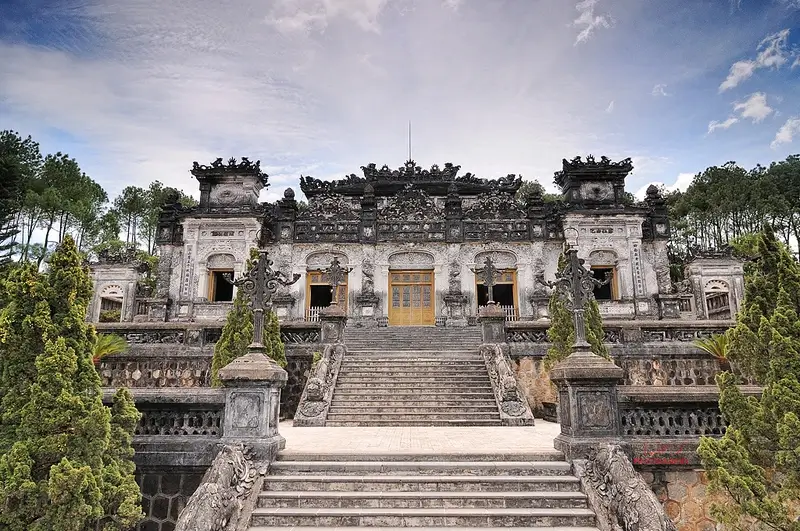
If anyone in your group finds heat or steps hard, those two places, the open ground of the Imperial City and the stairs at Khai Dinh, are the ones to plan around.
Bags count as much as people when you choose a car. Our 4-seat car takes up to three passengers and two bags, the 7-seat car up to six passengers and three bags. If you are bringing anything bulky, such as bicycles, surfboards or a pushchair, tell us when you book.
Health and safety basics
No vaccination is required to enter Vietnam; a travel clinic can tell you which ones are recommended for your trip. Dengue fever occurs in Vietnam and is spread by mosquitoes, so use insect repellent and cover your arms and legs where mosquitoes are about. Drink bottled or filtered water.
If you have a food allergy, carry a note in Vietnamese that names it, and show it when you order; our guide to what to eat in Hue has more on ordering.
The emergency numbers are 113 for the police, 114 for fire and 115 for an ambulance. The person who answers may not speak English, so if you can, ask your hotel or your driver to make the call.
Of everything on this page, traffic is what you will deal with every day, and it takes some getting used to. Travel insurance that covers medical treatment is worth having.
At monuments, pagodas and memorials
Thien Mu Pagoda in Hue is a working monastery, not a museum: cover your shoulders and knees. The royal tombs have no formal dress rule, but the temple buildings inside them are still places of worship, and the same outfit is right there. Our monuments guide covers what each site is like, and what to wear.
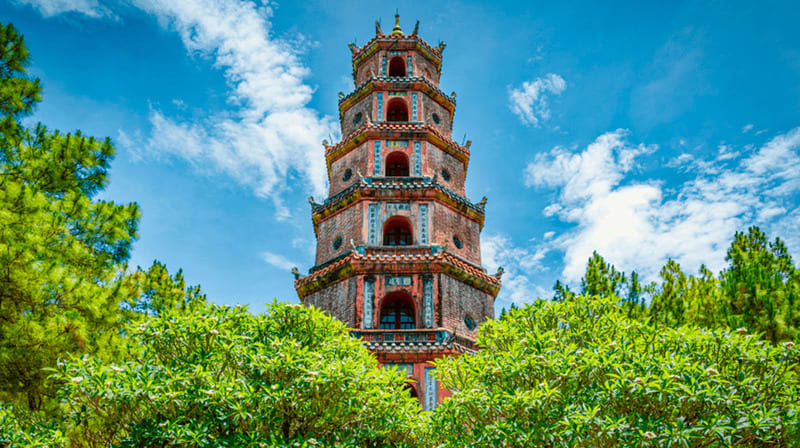
A few habits help everywhere. Where you see shoes left at a door, take yours off. Ask before you photograph people, monks included. At the war memorials and cemeteries around the DMZ, keep your voice down, as you would at any cemetery at home.
Booking a car, and when to book
A few facts shape travel on this strip. Hoi An has no airport and no railway, so every arrival there is by road, and the train is useful only between Hue and Da Nang. Phong Nha, the DMZ sites and the royal tombs are reached by road as well. Ride-hailing apps work in the cities; for everything else, our guide to getting around central Vietnam compares the car with the train, the bus and flights.
Car with driver against the alternatives: Hiring a Private Car with Driver in Vietnam.
To book with us, use our Routes page, where you can book directly, or message us on WhatsApp, Zalo or Messenger, or call. Book as soon as your dates are fixed, especially around Tet.
What you can book:
Fixed-price cars between Hue and Da Nang, Hoi An or Phong Nha, at the same price in either direction. The Hue to Phong Nha car stops at the DMZ sites on the way; entrance tickets are separate.
Day trips from Hue — the DMZ, with a longer version that adds Khe Sanh, and the Hue city tours, at fixed prices.
Airport transfers — Phu Bai airport and Hue at a fixed price; Da Nang, or Da Nang airport, and Hoi An at a fixed price given on request.
Pickup from your hotel in Da Nang or Hoi An for Ba Na Hills, the Marble Mountains, Son Tra or My Son, priced on request.
Other day trips, and a car with the same driver for several days, quoted on request.
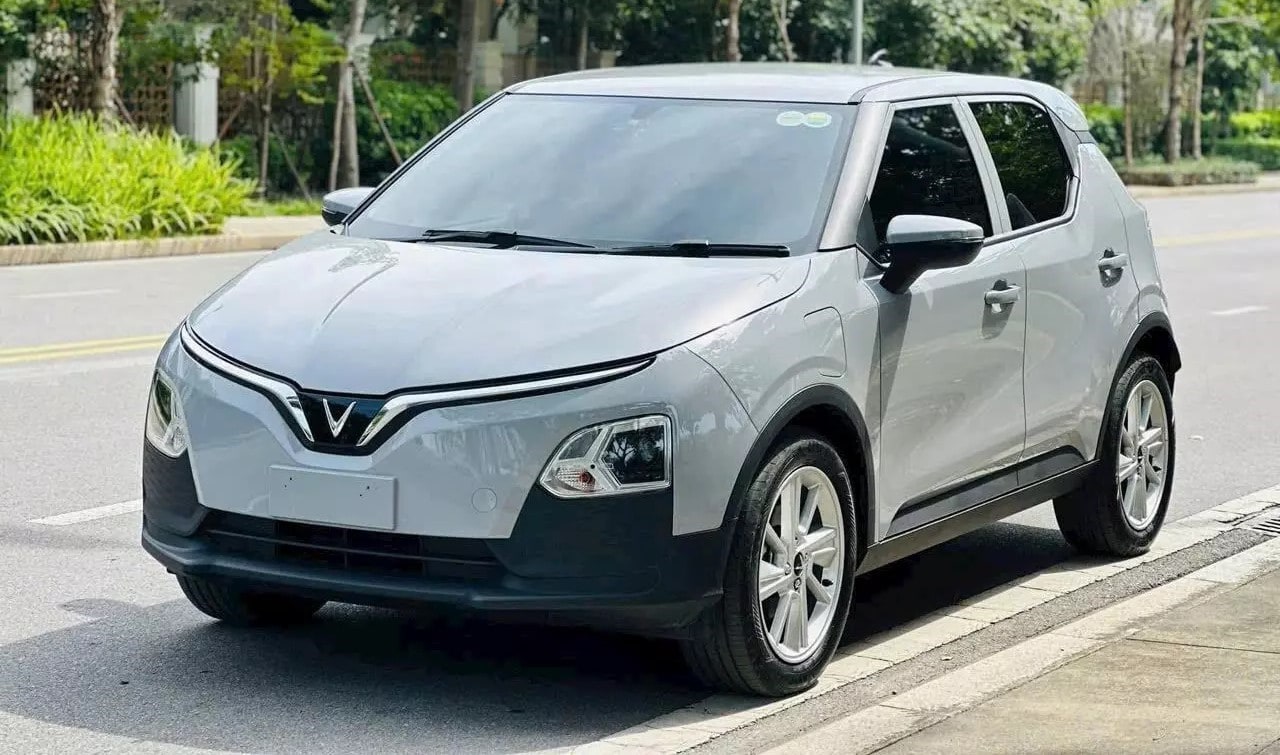
Our cars come in two sizes: a 4-seat sedan or compact SUV, and a 7-seat MPV. Drivers speak basic English, enough for stops and directions; if you want someone to explain the sites, a guide is a different service. Child seats are available: tell us when you book.
Next steps
Once your visa, dates and group size are settled, our Routes page shows today's price for a 4-seat and a 7-seat car on each route, and you can book from there.
If you are still deciding where to go, our central Vietnam travel guide describes what each place is like. For the region as a whole, our itineraries suggest how many days to give it, and our transport guide covers getting between places.
The blog collects every guide we have published so far, and the about page tells you who we are.