Vietnamese food is regional to a degree that surprises most first-time visitors, and nowhere is that clearer than in Hue. For close to 150 years this was the imperial capital, and the kitchens of the Nguyen court left a permanent mark: small portions, careful presentation, and an unusual number of separate dishes in a single meal. Layered on top of that is the everyday cooking of central Vietnam — hotter, saltier and more fermented than anything in Hanoi or Saigon.
You can eat well in Hue on a very small budget. What follows is what to order, roughly in the sequence a local day runs.
Morning
1. Bun bo Hue
The dish the city is known for, and the one most often misrepresented elsewhere. A proper bowl is built on beef bones and lemongrass, sharpened with fermented shrimp paste, and finished with a slick of chilli oil that sits on the surface rather than dissolving into the broth. The noodles are round and thicker than pho noodles. Expect sliced beef shank, a cube of congealed pork blood, and often a pork knuckle.
Eat it before 9am. The best places sell out and close — they are not restaurants so much as households that cook one pot a day. Ask for it khong cay if you want it without chilli, though the heat is part of the point.
2. Com hen and bun hen
Baby clams from the Perfume River, served over rice that has been left to go cold, with peanuts, crackling, herbs, banana flower, and a small bowl of clam broth on the side. It is aggressively savoury and costs almost nothing. Com hen is rice; bun hen is the same thing with noodles. Con Hen, the sandbank island the dish comes from, is a short drive from the centre and still the place locals send you.
Midday and afternoon
3. The banh family
Hue's small steamed and fried cakes are usually served as a set, which is the best way to try them:
Banh beo — thumb-sized rice discs in individual dishes, topped with dried shrimp and crackling.
Banh nam — flat rice cakes steamed in banana leaf, soft and mild.
Banh loc — translucent tapioca parcels around a shrimp and pork belly filling, chewy and slightly resistant.
Banh ram it — a glutinous rice dumpling set on a crisp fried base, so you get both textures in one bite.
All of them live or die on the dipping fish sauce, which in Hue is thinner and sharper than you may be used to.
4. Banh khoai
A smaller, thicker relative of the banh xeo you find in the south, fried crisp and served with a peanut and fermented soybean sauce rather than plain fish sauce. Wrap a piece in lettuce and herbs before dipping.
5. Nem lui
Seasoned pork paste moulded around a lemongrass stalk and grilled over charcoal. You assemble it at the table: rice paper, herbs, green banana, star fruit, then the pork, then the same peanut sauce. It is the most social thing on this list.
Evening
6. Bun thit nuong
Grilled pork over cold rice noodles with herbs and pickled vegetables. Simple, and a good choice if the day's chilli has caught up with you.
7. Che
Sweet soups served hot or over ice, and Hue takes them more seriously than anywhere else in Vietnam — there are dozens of varieties. Two are worth seeking out specifically: che bot loc heo quay, which encases a piece of roast pork in a chewy tapioca shell and floats it in syrup, and che hat sen, made with lotus seeds from the moat of the Imperial Citadel.
8. Banh canh Nam Pho
Thick rice-and-tapioca noodles in a dense broth of crab and shrimp paste, from the village of Nam Pho. Sold in the late afternoon and evening from carts and front rooms.
9. Com am phu
"Hell rice" — a plate of rice ringed by separately prepared components: shredded pork, egg, prawn, herbs, pickles. You mix it yourself. The name is far more dramatic than the dish, which is essentially a very well organised rice plate and dates to the 1930s.
Practical notes
Timing matters more than the address. Many of the best cooks work one service a day. Bun bo is a morning dish; banh canh is an evening one. Arriving at the wrong hour means a closed shutter.
Budget. A bowl of bun bo runs 30,000–50,000 VND. A full set of banh is 50,000–80,000 VND. It is difficult to spend a lot of money eating in Hue.
Heat. Central Vietnamese cooking is genuinely spicy. Chilli is usually served on the side, but bun bo arrives already hot.
Vegetarian. Hue has a strong Buddhist tradition and an unusual number of vegetarian restaurants, especially around the pagodas. Look for com chay. On the 1st and 15th of the lunar month, many restaurants serve vegetarian only.
Fitting it into a trip
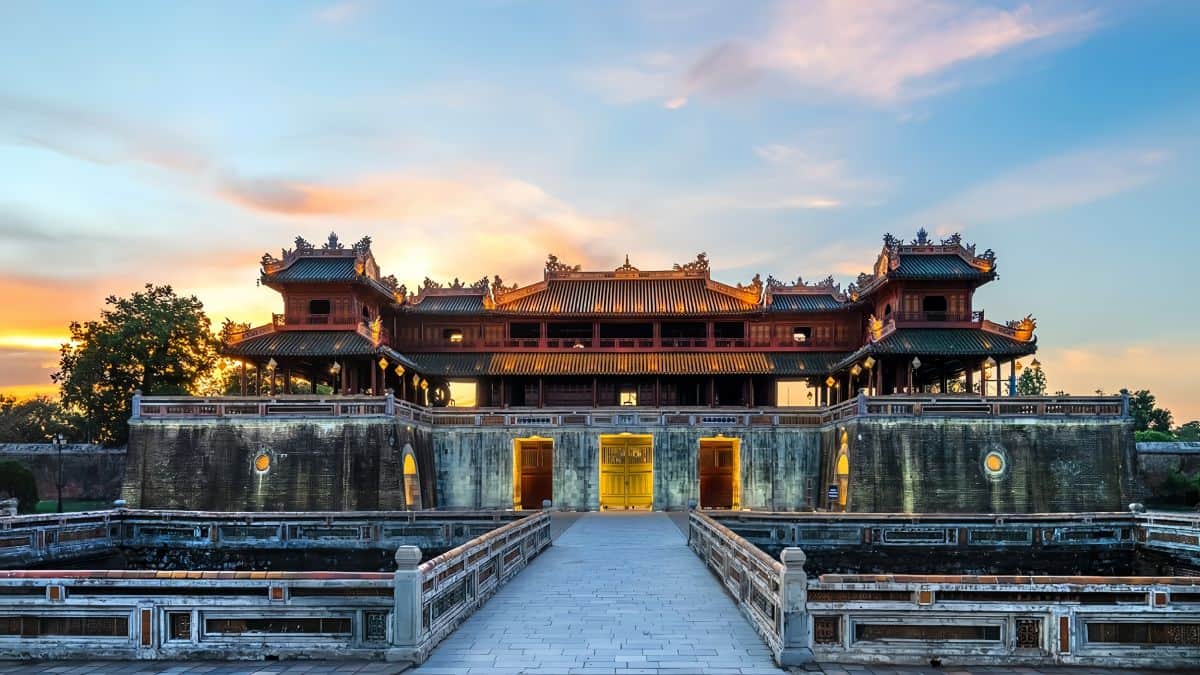
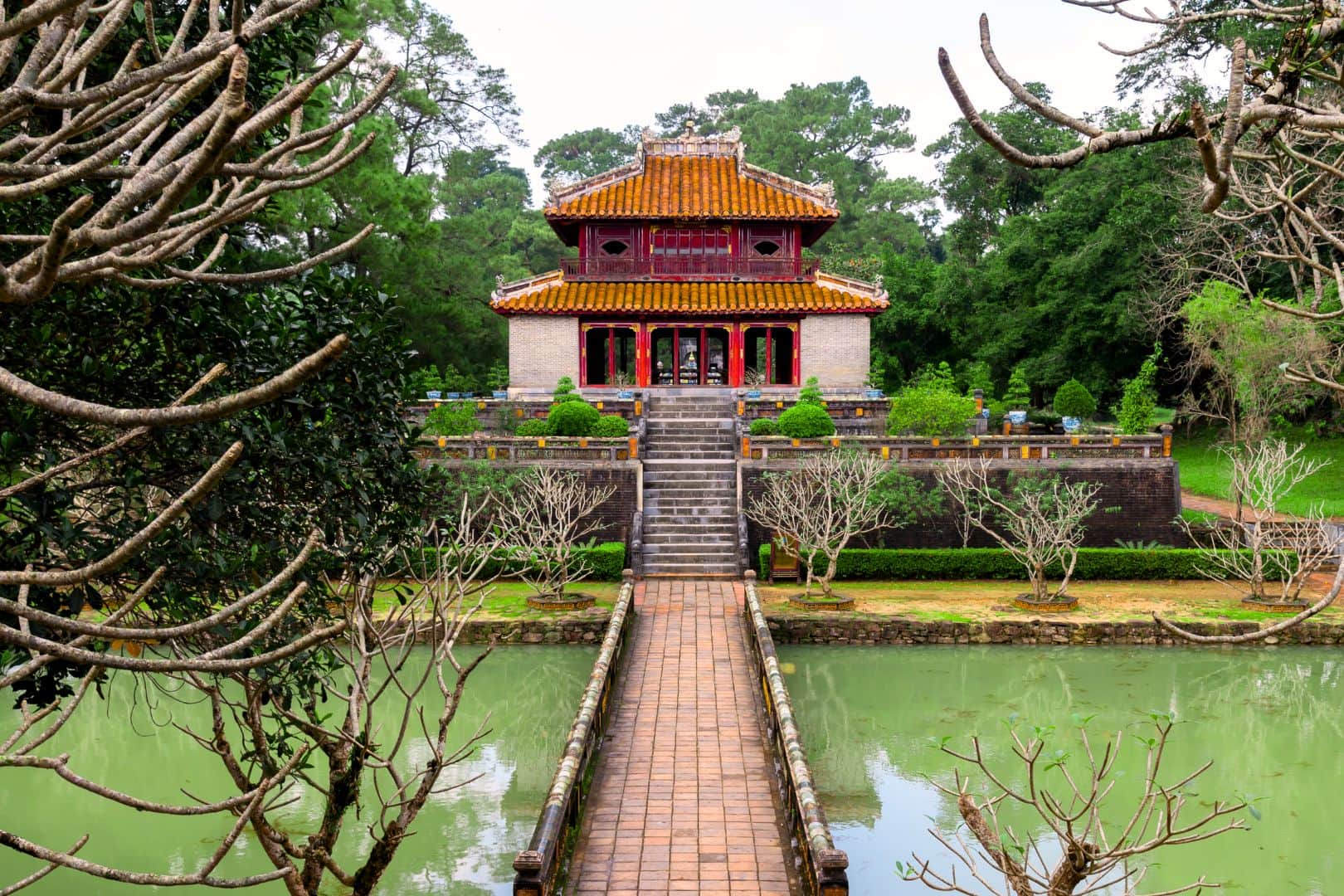
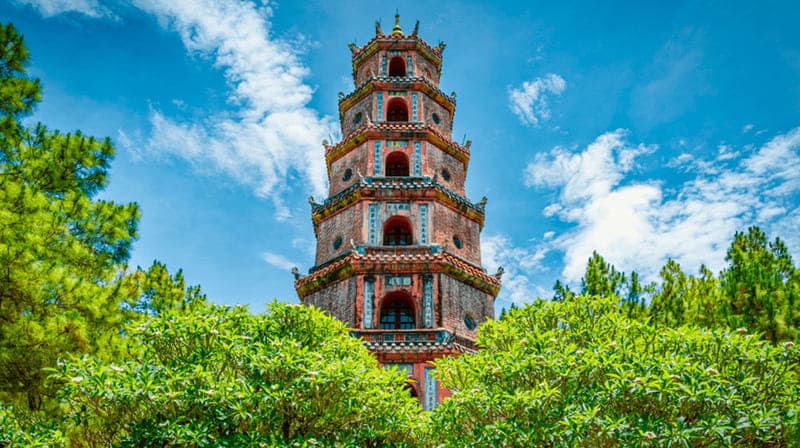
Most of these dishes are eaten in different neighbourhoods, and the good addresses are spread between the Citadel side of the river and the newer south bank. If you are in Hue for a day or two and want to combine eating with the main sights, a private car makes the difference between three stops and six — the tomb complexes are 8–15 km out of town in different directions, and returning to the centre for a specific meal is only realistic with your own transport.
A half-day city tour leaves the afternoon and evening free, which is when the banh, nem lui and che are at their best. Longer routes to Da Nang or Hoi An over the Hai Van Pass can be broken at Lang Co for seafood, which is a different cuisine again.